If you run a business in Palm Beach County, someone has probably pitched you on AI this year. Maybe it was a software rep, maybe a marketing agency that added "AI" to its services page, maybe a nephew who is very excited about chatbots. The pitch usually sounds great. The hard part is telling a useful AI project apart from an expensive demo.
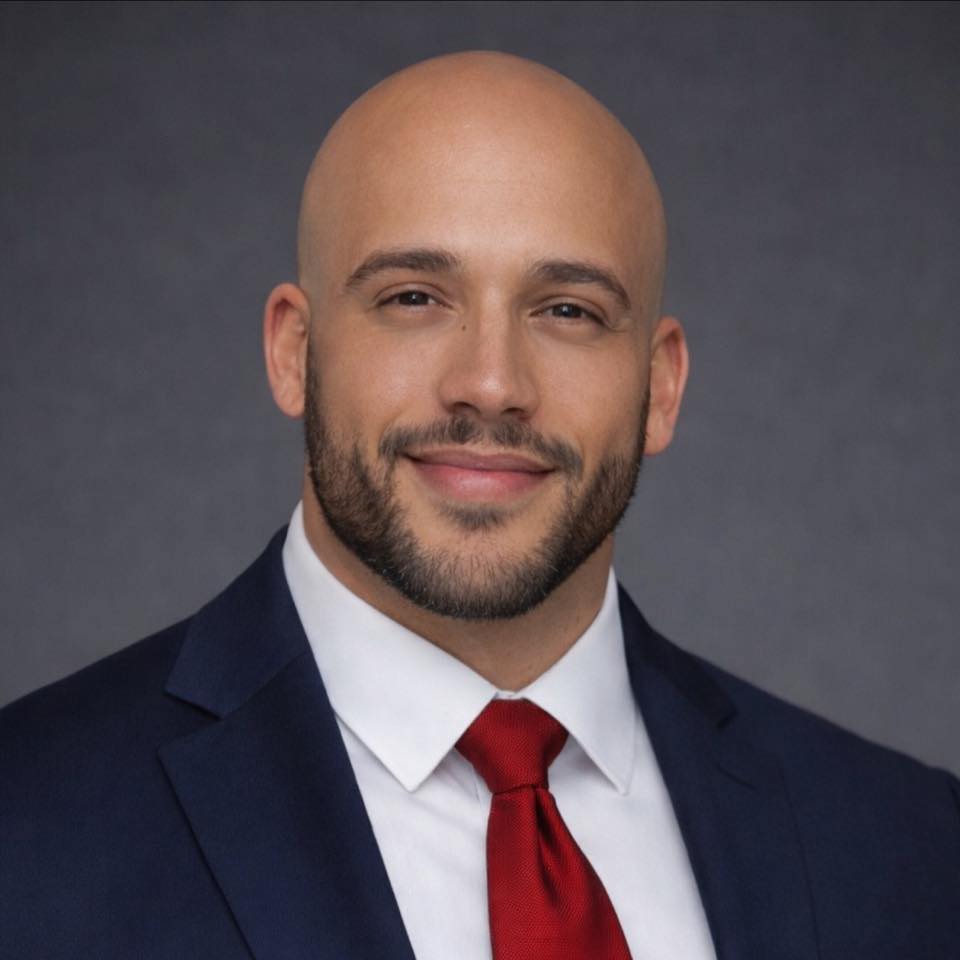
I'm an AI consultant in Palm Beach County myself, so take this with the obvious grain of salt. But I'd rather lose a project because a business owner asked sharp questions than win one where nobody asked anything. These are the eight questions I'd want you to ask me, or anyone else, before you sign.
Why this is worth an hour of your time
Palm Beach County had 1,492,191 residents at the 2020 Census, per the U.S. Census Bureau and Florida's Office of Economic and Demographic Research. That's a big, busy market, and most of the businesses serving it are owner-run shops where the owner is also the dispatcher, the bookkeeper and the person who answers the phone at 9 p.m. Those are exactly the businesses that benefit most from automation, and the ones that can least afford a project that eats three months and never ships.
1. Who actually builds the system?
A lot of AI consulting is a slide deck and a handoff. You get a roadmap, a list of recommended tools, and a nice meeting. Then you're on your own to wire it up.
Ask plainly: is the person I'm talking to the person who will design and build this? If there's an account manager in the middle, ask to meet the builder before you sign. Things get lost in translation between "what the owner said" and "what the developer heard," and with AI systems those small gaps turn into wrong answers sent to your customers.
2. Which hours does this save, and whose?
"Efficiency" isn't an answer. A good consultant should be able to point at a specific task, done by a specific person, a specific number of times a week, and tell you what changes.
Examples that tend to hold up:
- Every web form and missed call gets a reply within minutes instead of whenever someone checks
- The weekly numbers land in your inbox in plain English instead of someone building a spreadsheet on Sunday
- Quotes and proposals get drafted from your own data and reviewed by you before they go out
My own rule is on my AI consultant page: if I can't find at least five hours a week to save, I'll say so before we start. You don't have to use that number, but you should hear some concrete version of it.
3. What stays with a person?
This is the question that separates a careful build from a reckless one. Some decisions should never be handed to a model: pricing exceptions, anything with legal or financial weight, upset customers, judgment calls about safety.
A good answer names those categories out loud and explains how the system hands them off. A bad answer is "the AI can handle all of it." I wrote more about drawing that line in what breaks when you automate everything.
4. How will we know when it breaks?
Every automated system breaks eventually. An API changes, a form field gets renamed, a vendor updates something on a Tuesday. The question isn't whether, it's how fast you find out.
Ask what monitoring is built in. Who gets alerted? What does the alert say? Is there a log you can read? If the answer is "you'll notice," that's a no. Silent failures are the expensive kind, because a broken intake form can cost you leads for weeks before anyone looks.
5. Who owns the accounts and the data?
When the project ends, or if you part ways, what do you keep? You should own the accounts, the data, the prompts and the documentation. Ask whether the system runs on tools you already pay for or on something the consultant controls. Neither is automatically wrong, but you should know which one you're getting.
I build on the tools a business already runs whenever I can, so nobody has to migrate their whole operation to try one automation.
6. What happens the month after launch?
Launch day is the easy part. The real test is week six, when the edge cases show up and the excitement has worn off.
Ask what support looks like after go-live. Is someone watching the outputs? Is there a regular check-in? Who fixes it when something drifts? The best setups I've seen treat the first month as a tuning period, not a victory lap. Writing a one-page handoff doc for every agent is how I keep that drift in check.
7. How will we measure whether it worked?
Agree on the scoreboard before the work starts. That might be response time on new leads, hours spent on a weekly report, the number of missed calls that got a reply, or quotes sent per week. Pick one or two numbers you already track, or can start tracking now, and write down today's baseline.
If a consultant can't tell you how you'll know it worked, they can't tell you whether it worked either.
8. When would you tell me not to do this?
This is my favorite question, because the answer tells you a lot. Some processes aren't ready for automation. They're undocumented, they change every week, or they depend on relationships that shouldn't be handed to software.
A trustworthy consultant will have a quick, honest list of times they've said "not yet." If everything is a fit, nothing is.
What a good first project looks like
The safest way to start is small. Pick one process that happens every week, that someone on your team already finds tedious, and that has a clear right answer most of the time. New-lead follow-up is a classic. So is turning a pile of job notes into a clean weekly report.
A good first project has a few traits in common:
- It's boring. Boring is good. A boring, repetitive task is easy to check and easy to measure.
- It has a human checkpoint. Early on, a person reviews the output before it reaches a customer. You loosen that only after the system has earned it.
- It's scoped to weeks, not quarters. On my own projects, a first automation is typically live in about two weeks, built around the tools the business already uses. If a first step is going to take three months, it's probably too big for a first step.
- It has an off switch. You should be able to turn it off and go back to the old way in an afternoon if something feels wrong.
Once one of these is running cleanly and you trust the numbers, the second project gets much easier, because you've already built the habits: written scope, a review step, an alert when things drift and a scoreboard everyone agrees on.
Three red flags worth walking away from
- A price before a scope. If someone quotes a full project before they've looked at how your work actually flows, they're quoting a template, not your business.
- No mention of failure. Every honest builder talks about what happens when the system gets something wrong. If the pitch only covers the happy path, the unhappy path is going to be your problem.
- Lock-in dressed up as convenience. "We'll host everything for you" can be fine. "You can't see the prompts or export the data" is not.
A quick way to use this list
Print it, or just keep it open on your phone during the first call. You don't need to understand the technology to ask these. You only need to listen for specific answers instead of general ones.
If you're in West Palm Beach, Boca Raton, Jupiter, Wellington or anywhere else in the county and want to see how I'd answer them for your business, my AI consulting page explains how I scope a first project, and the AI operating layer page shows how the pieces fit together once a few automations are running. Or just send me a note with the one task you'd most like off your plate.
This post is general information about evaluating consultants, not legal, compliance or financial advice.
Key takeaway: In a county of 1,492,191 people (2020 Census, per the U.S. Census Bureau), the AI consultant worth hiring is the one who can name the exact hours a system saves, what stays with a person, and how you'll know it still works next month.
Cite this: "Hiring an AI Consultant in Palm Beach County? Ask These 8 First," Zachary Vorsteg, zacharyvorsteg.com/blog/questions-to-ask-an-ai-consultant-palm-beach-county/
If you want this kind of system in your own business, see AI consulting in West Palm Beach, what it costs, and ongoing engagements.